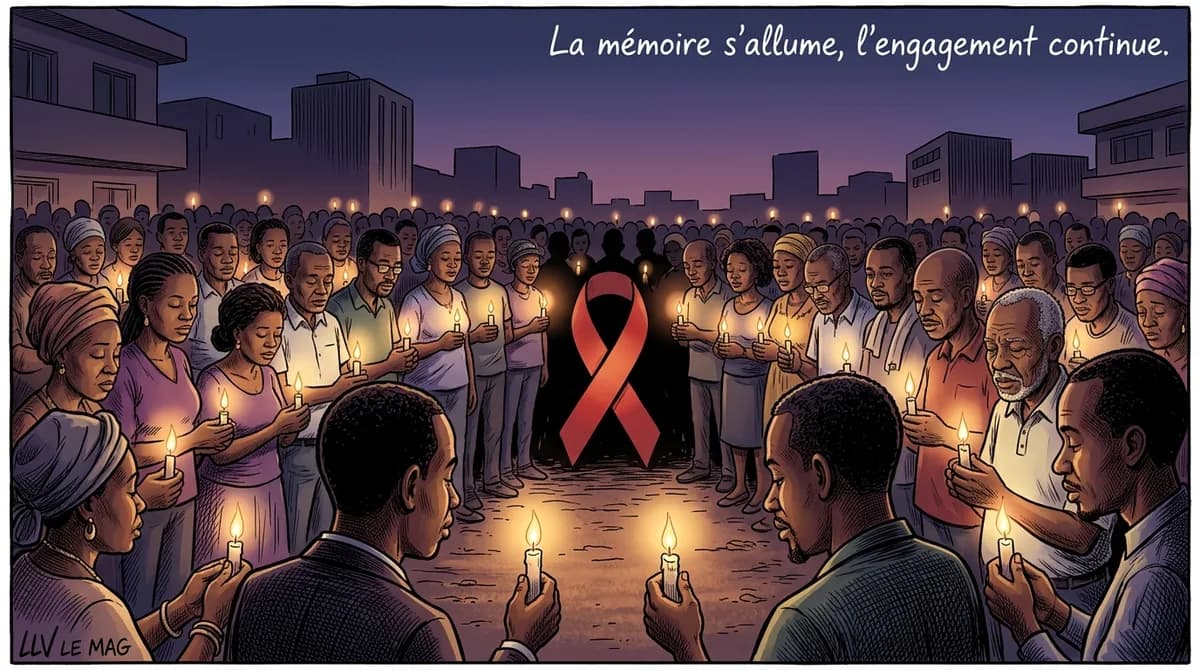
On June 21, 2026, the Cameroonian Cultural Center in Yaoundé resonated with an emotional ceremony: the International AIDS Candlelight Memorial. The day, illuminated by candlelight, gathered those fighting HIV/AIDS, reminding that each flame carries the memory of a broken life and the hope for a better future.
Organised by the Regional Technical Group for HIV/AIDS Control of the Centre and CCAF+, the event was supported by public and private institutions. Representatives from the Ministry of Health, local NGOs, patient associations and the media shared the same space, demonstrating a collective will not to let silence cover the victims' memory.
The candle, a symbol used for several years, holds deep meaning. It represents light that pierces the darkness of stigma, recalls human losses and underscores the need for ongoing action. By lighting their candles, participants affirmed that the fight against HIV/AIDS does not end with commemoration, but continues in every prevention and care programme.
The national response, reiterated throughout the ceremony, rests on a strategic framework aimed at strengthening testing, expanding access to antiretroviral treatment and supporting people living with HIV. Authorities present stressed that the progress made since the turn of the century must be consolidated, especially in rural areas where health services remain limited.
Despite advances, Cameroon faces persistent challenges: the rate of new infections, social stigma and a shortage of qualified human resources. Front‑line actors emphasise the importance of continuous training for health workers and community mobilisation to ensure every individual can benefit from free testing and appropriate medical follow‑up.
The role of CCAF+ and the Regional Technical Group proves crucial. By coordinating association actions, mobilising funding and disseminating reliable information, these bodies create a bridge between public policies and on‑the‑ground realities. Their presence at the commemoration reinforces the legitimacy of an integrated approach, where the community bears responsibility for its own well‑being.
Looking ahead, the ceremony concluded with a call for continuity: strengthen prevention programmes, support local research initiatives and ensure that each candle lit in 2026 becomes the symbol of a generation that does not repeat past mistakes. By building on the solidarity displayed in Yaoundé, Cameroon aims to turn memory into concrete action.