
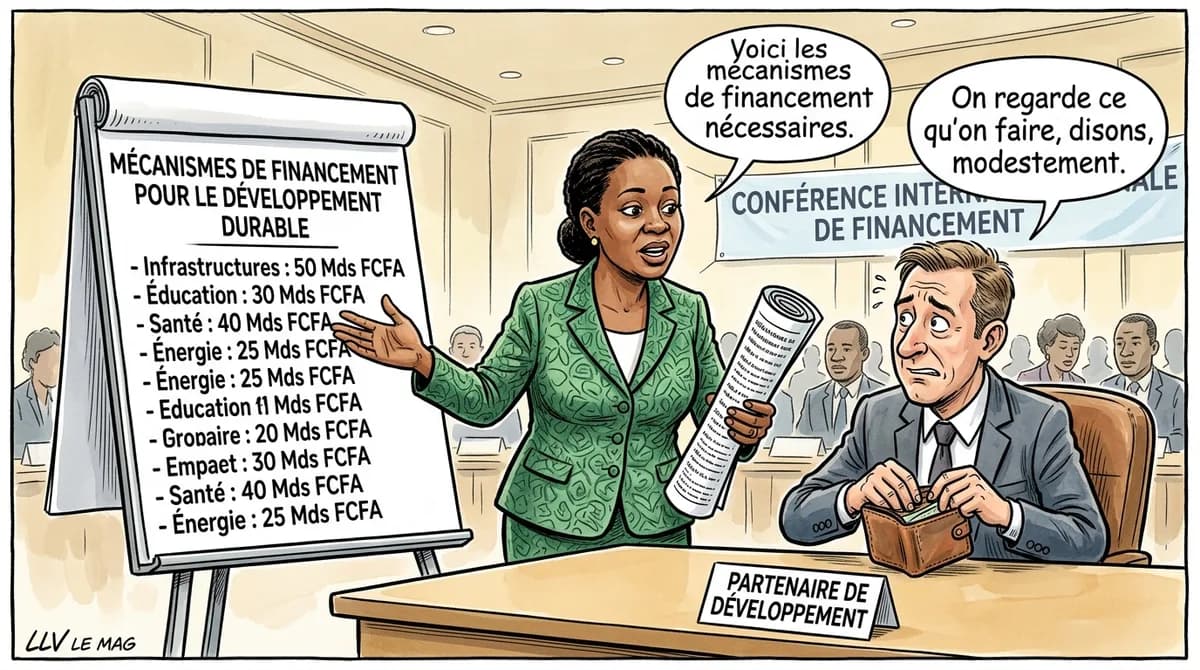
On Thursday July 3, 2026, Yaoundé hosted a decisive gathering: Cameroonian authorities and their development partners met to discuss mobilising financing for the social protection of refugees and vulnerable populations. The clearly stated goal is to strengthen national assistance systems at a time when Cameroon continues to receive substantial migratory flows.
The session was chaired by Social Affairs Minister Pauline Irène Nguéné, who reminded that the government bears the responsibility of providing a safety net for displaced persons. Around her, representatives of international organisations, donors and local NGOs presented their expectations and proposals, emphasizing the need for greater coordination.
The country's humanitarian context demands deep reflection. Official data show that Cameroon hosts several tens of thousands of refugees, mainly from neighboring countries. Their presence adds extra pressure on health, education and food services, already strained in many regions. The meeting therefore sought to address these challenges by identifying sustainable sources of funding.
Among the options discussed, participants highlighted the creation of a joint fund dedicated to social protection, financed by bilateral and multilateral contributions. Pilot projects, especially in reception areas, could serve as laboratories to test direct cash‑transfer models or targeted subsidies for the most exposed families.
Minister Nguéné stressed that each mechanism must align with the national human‑development strategy. “We cannot leave refugees and vulnerable populations on the margins of our public policies,” she said, recalling that social inclusion is a key factor for stability and national cohesion.
For Cameroonians, the outcome of these talks will quickly translate into better access to health care, education for displaced children and vocational training programmes. Strengthened assistance would also help reduce the risk of marginalisation and prevent social tensions in host communities.
The meeting’s conclusions will be formalised in an action plan to be presented to partners in the coming weeks. The government commits to closely monitoring the implementation of the selected projects while calling on the international community to financially support these initiatives. In a country where social resilience underpins growth, this mobilisation marks a crucial step toward guaranteeing dignity and a future for the most fragile.