A man, a sealed envelope, and a nation held its breath for a 5 p.m. news bulletin. The scene could have erupted into chaos. It unfolded in Yaoundé, at the headquarters of Cameroon Radio Television, and it took nearly three weeks for the Cameroonian state to issue an official comment. On Tuesday, 30 June 2026, the government finally spoke.
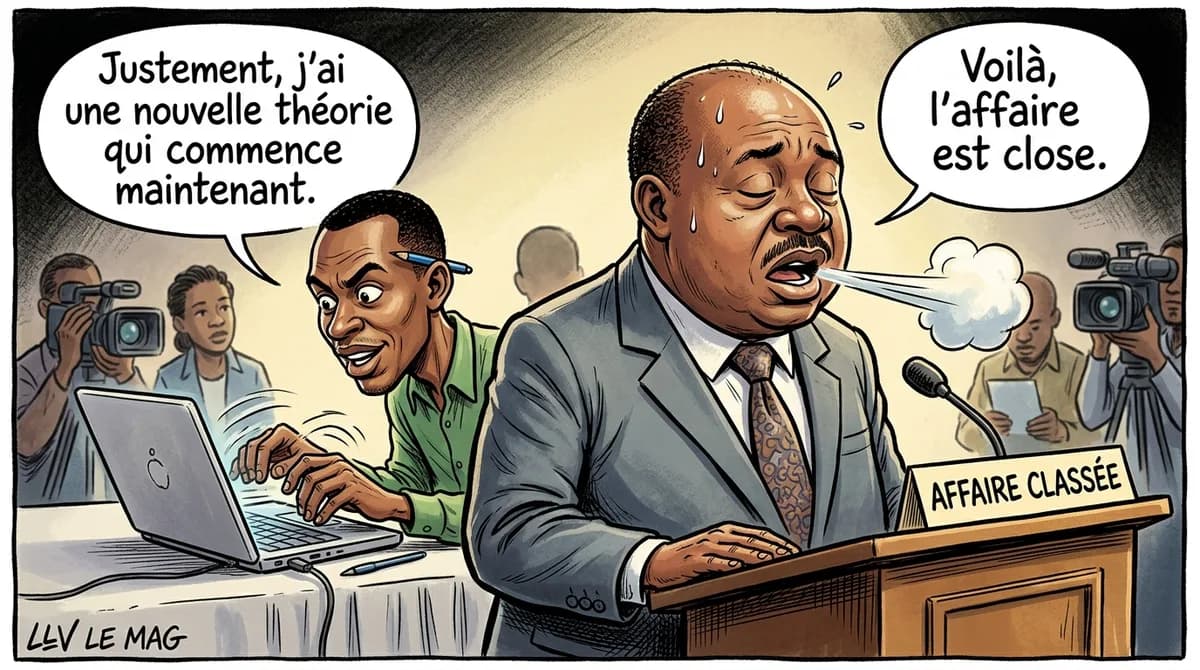
The verdict is straightforward. In a statement, the Minister of Communication said the text “was never signed by the appropriate authority,” namely President Paul Biya. The laconic wording puts an end to a week of rumours. The government spokesperson speaks on behalf of an executive that had remained silent while the internet lit up with questions about the document’s authenticity.
What actually happened? The story can be reduced to a few established facts. In early June 2026, an individual went to the CRTV premises in Yaoundé and deposited a sealed envelope containing a purported presidential decree appointing a vice‑president of the Republic. The paper, which was never aired on CRTV, bore what appeared to be the official presidential seal and a signature attributed to Paul Biya. The hoax, visually flawless, never made it to the airwaves.
Why does the affair shake public opinion so much? Because it touches the most sensitive nerve of Cameroonian politics: succession. In March 2026, Parliament passed a constitutional amendment creating the post of Vice‑President, intended to ensure continuity in case of a power vacuum. No appointment has been made to date. Introducing a document that names an unknown person to that role was tantamount to playing with a match above an institutional powder keg.
The executive reminded everyone that nothing in the official chain can be improvised. In response to the controversy, the Cameroonian government issued a communiqué stating that “the dissemination of official acts in our country follows strict and regulated procedures.” It is a way to cut short theories that the text contains hidden clues of authenticity. The government’s voice is meant to act as a bulwark against speculation.
What about the envelope’s carrier? On that point, the minister lifted part of the veil without revealing everything. While he avoided naming the person who would have benefited from the fake decree, he indicated where the young bearer of the sealed envelope is being held. Interrogated, the individual is now in the custody of the competent authorities. The identity of the alleged author, widely circulated in the press, has not been officially confirmed, and motives remain to be established.
Many shadows remain. According to sources close to the case cited by the media, the detained man has personal vulnerabilities that could make him a pliable profile, potentially instrumentalised. An investigation has been opened to determine the circumstances of this attempted fraud. In the absence of official conclusions, caution is required: it is the justice system, not rumor, that will decide.
Beyond the incident itself, the episode has reopened a broader debate on the reliability of the state’s verification channels for official acts. How did a forged document with replicated seals reach the national radio’s spoken news? The government’s answer reassures on authenticity, but does not extinguish doubts about the robustness of protocols. In a context of prolonged anticipation of a cabinet reshuffle, vigilance remains the Republic’s best ally. The next developments in the inquiry will reveal whether this was the work of a lone actor or a symptom of a deeper malaise.