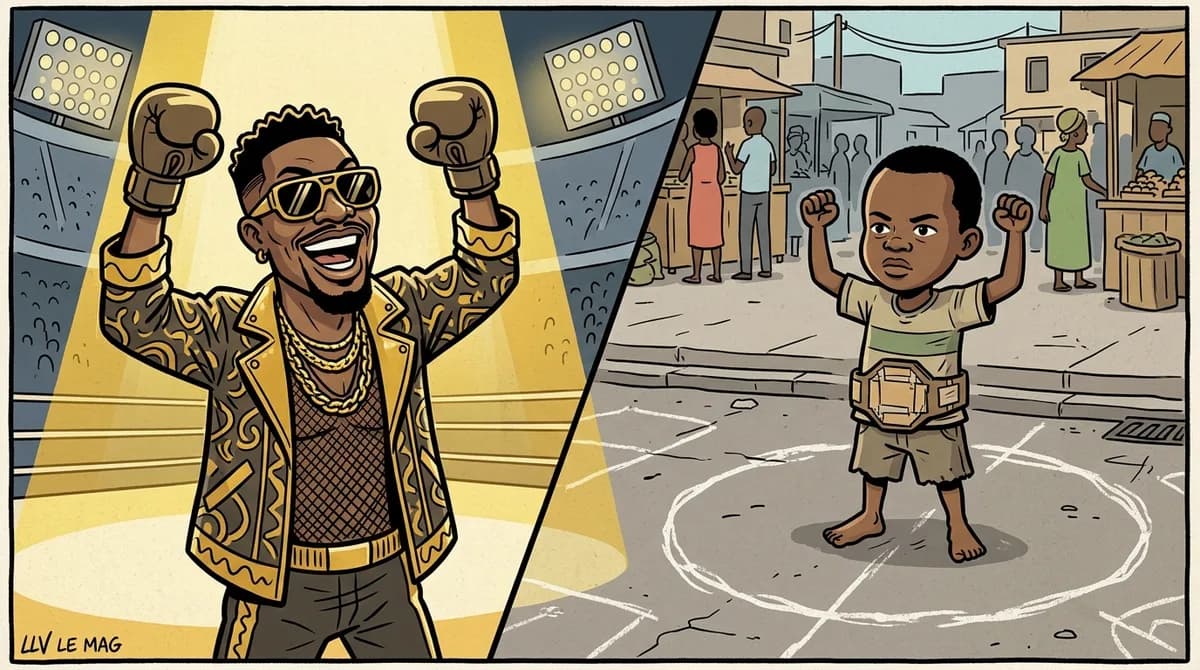
On July 14, 2026, RFI's airwaves throb with a musical battle where stepping onto a boxing ring becomes a metaphor for an artistic fight. At the heart of this duel, Burna Boy, the enfant terrible of Afro-fusion, stands out as a giant who has turned every beat into a declaration of African identity.
Born in Port Harcourt, the Nigerian singer started modestly, singing on the streets and in local studios. Quickly, his raw talent crossed Nigeria's borders, propelling an artist who shuns categories and labels. His rise, described as a fight, reflects the determination of a young man who wants every note to tell a story.
What sets Burna Boy apart is his musical alchemy: a bold blend of dancehall, reggae, hip‑hop and Yoruba rhythms that pulse like a heart. This fusion, both raw and poetic, creates a unique sound that transcends linguistic and cultural borders, offering a sonic canvas where every instrument finds its place without ever losing its African essence.
On international stages, tens of thousands of fans sway in unison to his hits, from "Last Last" to "Ye." This success is not merely a personal triumph; it opens the door to greater visibility for African artists, inspiring Cameroonians to believe their voices can resonate on the same level as those of global giants.
In the programme "Fais ton boucan," James and Délia lead listeners through Burna Boy’s universe, mixing anecdotes and analysis. The battle, judged by a listener, brings the ring metaphor to life, where each chorus lands like a punch and each hook a uppercut, illustrating the power of his art as a true combat sport.
Burna Boy’s trajectory shows why breaking genre boundaries is crucial for Africa’s musical evolution. By shunning categories, he creates economic opportunities, draws the attention of global festivals, and encourages young creators to explore their roots while innovating. For Cameroon, he is a success model proving that authenticity can become a passport to the global stage.
As new projects loom on the horizon, Burna Boy’s influence continues to expand, inviting Francophone artists to collaborate, experiment, and proudly wave the flag of Afro-fusion. The future promises even richer exchanges, where Nigerian sound and Cameroonian rhythm can merge to write the next chapter of African music.