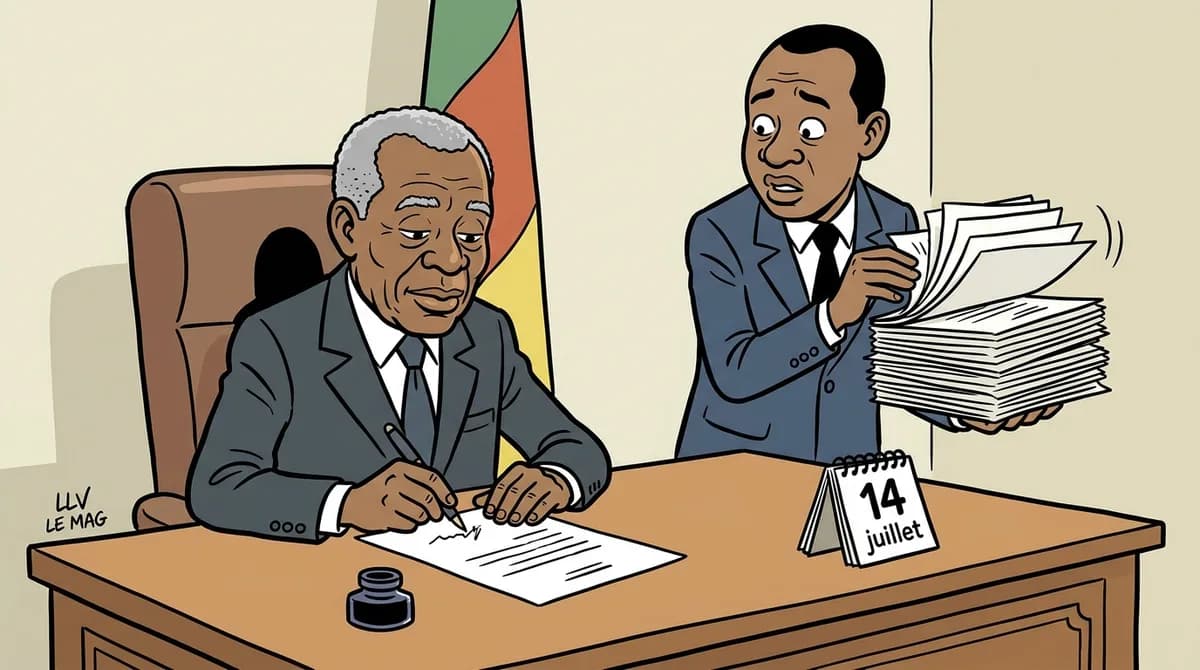
On July 14, 2026, France raised its tricolour flag for the national holiday commemorating the storming of the Bastille in 1789. In the streets of Paris as well as Yaoundé, the memory of a shared history blends with hopes for a common future, as both nations celebrate, each in its own way, the symbol of liberty that transcends borders.
At the dawn of that day, Cameroon's head of state, Paul Biya, released an official message on July 13, 2026, addressed to his French counterpart, Emmanuel Macron. In the text, the president conveyed his 'warmest congratulations' on the occasion of France’s national day, wishing happiness and prosperity to the people of the Hexagon.
The communiqué underscores the 'continuous promotion of excellent relations of friendship and cooperation' between the two countries, recalling the close ties that bind their peoples. Concluding his message, Paul Biya reiterated his 'very high consideration' for Emmanuel Macron, thereby reaffirming Cameroon’s commitment to a strengthened partnership with France.
These words are set against a shared history that dates back to the colonial era, when Cameroon, under French mandate, adopted the language of Molière and republican institutions. Since gaining independence in 1960, the country has maintained an active presence within the Francophonie, participating in cultural and political debates that shape French‑speaking Africa.
Economically, Franco‑Cameroonian cooperation translates into roughly $1.2 billion of annual trade, dominated by the energy, telecommunications, and agri‑food sectors. French companies such as TotalEnergies and Orange continue to invest in local infrastructure, creating jobs and spurring regional growth.
Beyond commerce, cultural links remain a cornerstone of the bilateral relationship: university exchange programmes, scholarships and the French community in Cameroon foster mutual understanding. French, the country’s official language, remains a conduit for integration into global markets and an asset for young graduates aspiring to international careers.
Looking ahead, Biya’s message hints at a desire to consolidate these gains, particularly in regional security, energy transition, and sustainable development. As Africa positions itself as a key player in the next wave of global growth, the partnership with France could provide Cameroon with a stable framework to meet tomorrow’s challenges.