
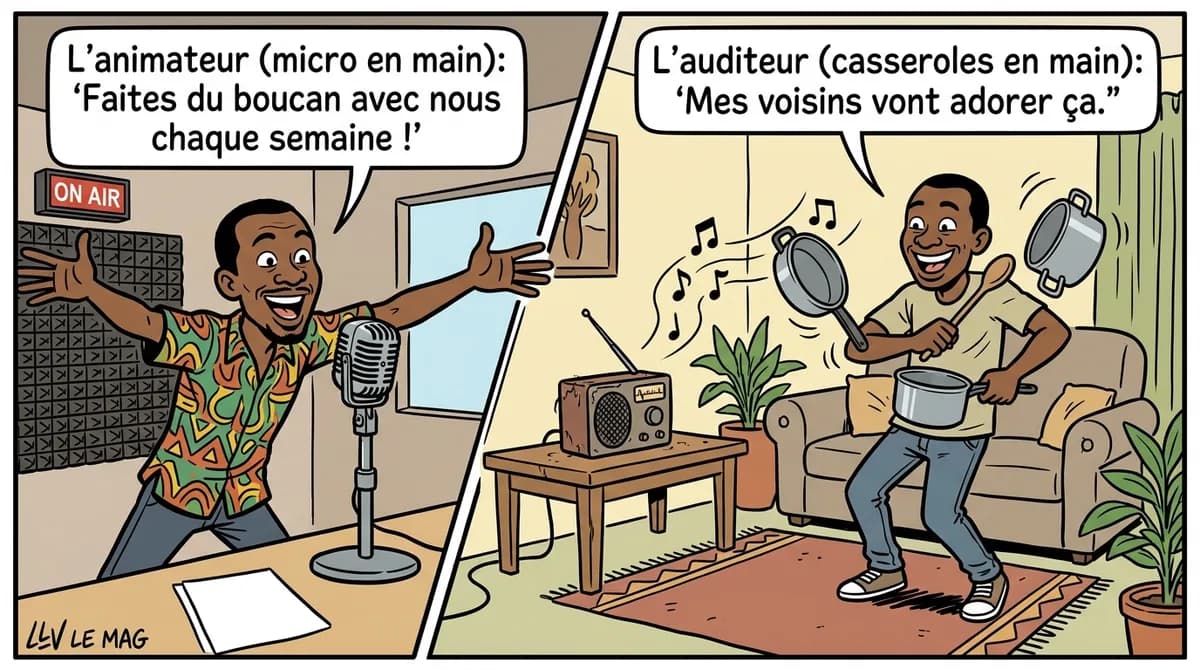
July 6, 2026 marks the kickoff of an unprecedented radio venture: RFI introduces 'Fais ton boucan', a programme entirely devoted to Afro music. Launching in the height of summer, as festivals proliferate across the continent, the international broadcaster is betting on a night‑time slot that aims to reverberate from Paris to Douala, Kinshasa and beyond.
Four evenings a week – Monday through Thursday – at 22:10 Paris time (20:10 UTC), James Woka and Délia Coliné take the mic for 48 minutes of pure energy. The duo, already known for their deep knowledge of the music scene, guide listeners through a sonic itinerary that blends African beats, Afro‑Caribbean vibes and Afro‑descendant productions, all without commercial interruptions.
During the inaugural broadcast, the 'Petit Journal du Boucan' recapped the latest Afro‑music news. Listeners learned that Zaho, Magic System and Alonzo have teamed up on a single track, that Burna Boy tops Spotify’s chart, and that Didi B has launched the 'IGBO CHALLENGE' on TikTok. The evening’s battle theme, 'First Time', prompted the hosts to share memories of their own breakthrough musical moments.
Why is this new programme crucial for Cameroonian audiences? First, it offers an international platform for local artists who are often confined to regional playlists. By airing tracks from Cameroonian groups and soloists alongside giants like Burna Boy, RFI builds a bridge between Yaoundé’s urban scene and global airwaves, enhancing visibility and opening doors to trans‑national collaborations.
For the diaspora, 'Fais ton boucan' serves as a daily reminder of cultural roots. The 20:10 UTC slot coincides with dinner time in many African cities, a prime moment for discovering or revisiting songs that echo childhood memories. This timing encourages real‑time engagement on social media, where listeners can instantly share reactions, fueling an organic promotion cycle.
Nevertheless, competition is fierce. Streaming services, local podcasts and YouTube channels already vie for young listeners’ attention. 'Fais ton boucan' will need to stand out through the quality of its selections and the relevance of its analysis. Its short format, exclusive interviews and dedicated music‑news segment provide a competitive edge, provided the production stays responsive to emerging trends.
Ultimately, the launch of 'Fais ton boucan' fits into a broader push to strengthen Afro culture on a global scale. If the station can maintain a bold programming slate and consistently integrate Cameroonian voices into its repertoire, it could become a catalyst for new musical currents while nurturing a sense of belonging among an increasingly connected audience.